Sustainability has become an important topic for brands, retailers, and consumers. More customers are now looking for packaging that can reduce environmental impact while still protecting the product, maintaining shelf appeal, and supporting brand growth.
For flexible packaging, recyclable packaging is not just about using “eco-friendly” materials. It requires the right material structure, printing method, barrier performance, sealing strength, and application design. Choosing the wrong recyclable material may affect shelf life, bag strength, or production performance.
This guide explains what recyclable packaging means, what options are available, and how to choose the right recyclable packaging solution for your product.
1. What Is Recyclable Packaging?
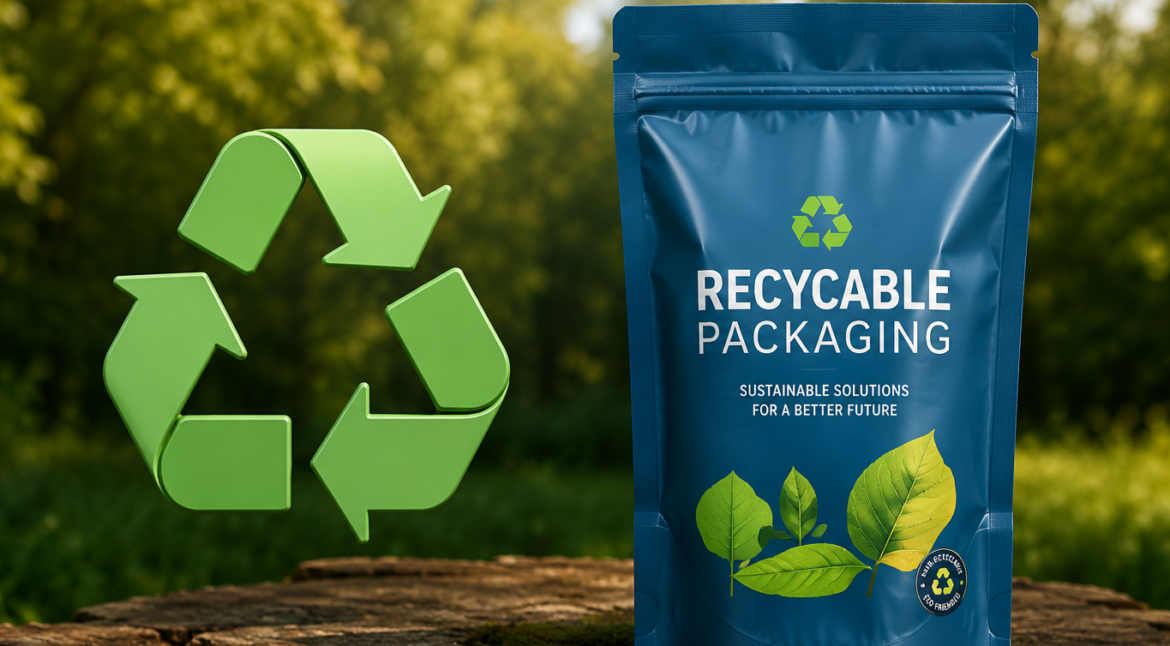
Recyclable packaging refers to packaging that can be collected, processed, and reused as material for new products through recycling systems.
For flexible packaging, recyclability usually depends on the material structure. Traditional flexible packaging often uses multiple different materials laminated together, such as PET, VMPET, AL, and PE. These structures can provide excellent barrier performance, but they are more difficult to recycle because different material types are bonded together.
Recyclable flexible packaging usually uses a mono-material structure, such as PE/PE, which is easier to recycle compared with mixed-material structures.
2. Why Are Brands Choosing Recyclable Packaging?
Recyclable packaging helps brands respond to sustainability trends and consumer expectations.
Many brands now want packaging that supports:
- • Reduced environmental impact
- • Better brand image
- • Retailer sustainability requirements
- • Recyclability claims
- • Long-term packaging strategy
- • Compliance with future market trends
For food, coffee, pet food, snacks, supplements, cannabis, tea, and other consumer products, sustainable packaging can also become part of the brand’s selling point.
3. Common Recyclable Flexible Packaging Options
There are several recyclable or more sustainable packaging options for flexible packaging.
PE/PE Mono-Material Packaging
PE/PE is one of the most common recyclable flexible packaging structures. Because the main structure is based on polyethylene, it is more suitable for recycling compared with traditional mixed-material packaging.
PE/PE can be used for many types of pouches, including stand up pouches, zipper bags, flat pouches, and some roll film applications.
It is suitable for brands that want recyclable packaging while keeping flexible packaging functions such as printing, sealing, and pouch forming.
PE/EVOH-PE/PE High-Barrier Recyclable Packaging
For products that need better oxygen barrier, PE/EVOH-PE/PE can be considered. EVOH helps improve oxygen barrier performance while keeping the structure mainly PE-based.
This structure is suitable for some food, snacks, pet food, and products that require better freshness protection.
However, the exact structure should be confirmed based on product requirements and recyclability standards in the target market.
PCR PE Packaging
PCR stands for Post-Consumer Recycled material. PCR PE packaging uses recycled plastic content in the material structure.
For flexible packaging, PCR content usually needs to be controlled carefully to ensure strength, sealing, and food-contact safety requirements. In many cases, around 30% PCR PE can be considered depending on the application and material structure.
PCR packaging is suitable for brands that want to reduce virgin plastic use and support recycled material applications.
Kraft Paper Laminated Packaging
Kraft paper packaging gives a natural and eco-style appearance. It is often used for coffee, tea, snacks, organic food, pet treats, and natural product packaging.
However, kraft paper laminated packaging is not always fully recyclable because it may be laminated with plastic or barrier film. It is more suitable when the brand wants a natural look, but the exact recyclability depends on the final structure.
4. Recyclable Packaging vs Traditional High-Barrier Packaging
Traditional high-barrier packaging often uses structures such as PET/VMPET/PE or PET/AL/PE. These materials provide strong protection against oxygen, moisture, light, and aroma loss.
Recyclable PE/PE packaging is more sustainable, but it may not always provide the same barrier performance as aluminum foil or metalized structures.
Here is a simple comparison:
| Item | Traditional High-Barrier Packaging | Recyclable PE/PE Packaging |
| Barrier Performance | Very high | Medium to high depending on structure |
| Recyclability | More difficult | Better recyclability |
| Shelf Life Protection | Excellent | Depends on product requirement |
| Appearance | Can support metallic effect | Usually non-metalized |
| Cost | Depends on structure | May be higher for special recyclable materials |
| Best For | Coffee, high-barrier food, long shelf-life products | Snacks, pet food, dry food, sustainable packaging projects |
The best option depends on the product. Some products can use recyclable PE/PE directly, while others may need a high-barrier recyclable structure or traditional high-barrier material.
5. Which Products Are Suitable for Recyclable Packaging?
Recyclable flexible packaging can be used for many products, but the material must match the product’s protection needs.
Common applications include:
- • Snacks
- • Pet food
- • Tea
- • Protein powder
- • Dry food
- • Powder products
- • Cannabis packaging
- • Frozen food
- • Daily-use products
- • Some coffee packaging, depending on barrier requirements
For products that are highly sensitive to oxygen, moisture, aroma loss, or light, the material structure should be tested carefully before mass production.
6. Can Recyclable Packaging Be Custom Printed?
Yes. Recyclable flexible packaging can be custom printed.
Depending on your order quantity and artwork, recyclable packaging can use gravure printing or digital printing.
Gravure printing is suitable for bulk production with stable colors and repeat orders. Digital printing is suitable for small quantity orders, multiple SKUs, and trial projects.
Common printing and finish options may include:
- • Matte finish
- • Glossy finish
- • Soft touch matte effect
- • Transparent window
- • Custom colors
- • Brand logo and product information
- • Some special effects depending on material compatibility
However, some special effects such as metallic layers, aluminum foil, or heavy composite structures may affect recyclability, so they should be confirmed before production.
7. Can Recyclable Packaging Have Good Barrier Performance?
Yes, but the barrier level depends on the material structure.
Standard PE/PE recyclable material can provide general protection for many dry products. If higher oxygen barrier is required, PE/EVOH-PE/PE may be used.
For products that require strong aroma protection, long shelf life, or high moisture barrier, the packaging supplier should evaluate the product and suggest a suitable material structure.
Before mass production, it is recommended to test:
- • Sealing strength
- • Oxygen barrier
- • Moisture barrier
- • Bag stiffness
- • Filling machine performance
- • Shelf life requirement
- • Product compatibility
8. Is Recyclable Packaging More Expensive?
Recyclable packaging can sometimes be more expensive than traditional structures because special mono-material films or high-barrier recyclable materials may cost more.
However, the final cost depends on:
- • Material structure
- • Bag size
- • Thickness
- • Printing method
- • Quantity
- • Barrier requirement
- • Zipper or accessories
- • Surface finish
For brands with long-term sustainability goals, recyclable packaging can bring value beyond material cost. It can improve brand image, support sustainability communication, and meet buyer or retailer requirements.
9. What Should You Confirm Before Choosing Recyclable Packaging?
Before switching to recyclable packaging, you should confirm these details:
- • Product type
- • Product weight
- • Required shelf life
- • Barrier requirement
- • Bag style
- • Printing design
- • Filling method
- • Storage condition
- • Target market recyclability requirements
- • Budget and MOQ
Recyclable packaging should not only look sustainable. It must also protect the product properly and work well during filling, sealing, transportation, and retail display.
10. How PX Package Supports Recyclable Packaging Projects
PX Package supports custom recyclable flexible packaging solutions for different industries and applications.
We can help with:
- • PE/PE recyclable packaging structure recommendations
- • PE/EVOH-PE/PE high-barrier recyclable options
- • PCR PE material options
- • Custom printed recyclable pouches
- • Roll film for automatic packing machines
- • Artwork checking and production proof
- • Gravure and digital printing solutions
- • Bag making and quality inspection
- • International shipping support
Our team can recommend suitable material structures based on your product, shelf life, printing design, and sustainability goals.
Conclusion
Recyclable packaging is an important direction for modern flexible packaging, but it must be selected carefully. The best recyclable packaging solution depends on the product type, barrier needs, bag style, printing requirements, and target market.
PE/PE mono-material packaging is a common recyclable option. PE/EVOH-PE/PE can provide better barrier performance. PCR PE can help reduce virgin plastic usage. Kraft paper laminated packaging can provide a natural appearance, but its recyclability depends on the final structure.
At PX Package, we help brands choose suitable recyclable and sustainable packaging solutions while maintaining product protection, printing quality, and production reliability.
Looking for recyclable packaging for your brand? Contact PX Package for material recommendations and a free quotation.